
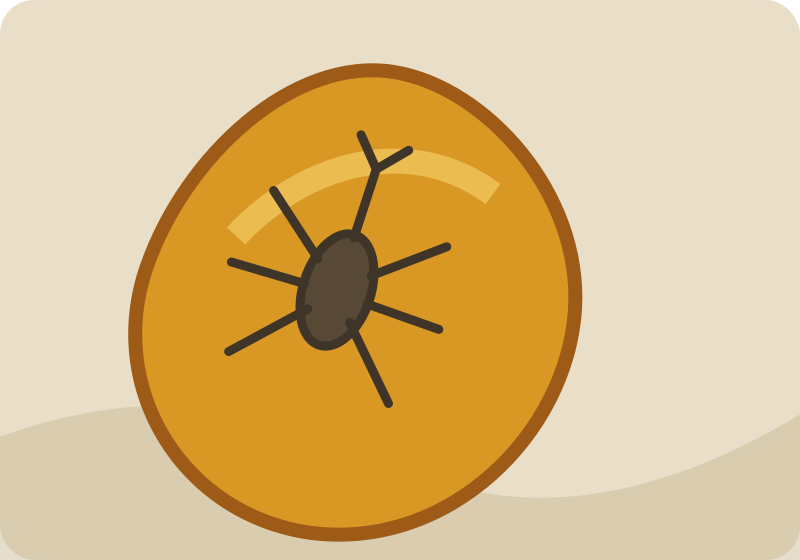
Insects preserved in amber, shale, limestone, and fine lake deposits, where minute anatomy and provenance are critical.
Identification checklist
Record the specimen as an object before accepting a taxonomic label. Look for the following features and photograph them with a scale:
- Wing venation, segmentation, legs, and antennae
- Natural relation to matrix or resin flow
- Deposit-specific preservation style
Preparation and authenticity risks
Preparation is not automatically deception. The critical issue is whether the work is visible, anatomically reasonable, stable, and disclosed.
- Modern insects embedded in resin
- Painted impressions
- Claims of rare orders based on blurry photographs
What tends to affect collector value
Value is comparative and can change substantially with small differences in completeness, preparation, provenance, or restoration.
- complete diagnostic anatomy
- credible deposit and age
- clear imaging and responsible sourcing
Questions to ask a seller
- What country, region, formation, or quarry produced the specimen?
- Which portions are original fossil material, matrix, filler, adhesive, paint, or reconstruction?
- What repairs, stabilization, polishing, acid preparation, or mechanical preparation were performed?
- What dimensions are being measured, and is the scale included in photographs?
- What documentation supports legal collection, ownership, and export?
Preservation priorities
Do not clean or consolidate until you understand the matrix and mineralogy. Photograph the specimen and all labels first. Store it with stable support, moderate conditions, and a collection record that preserves the seller, date, claimed locality, preparation disclosures, and original images.
Build a comparison set
Use listings to compare morphology, matrix, preparation, locality claims, dimensions, repairs, and seller disclosure. Similar appearance alone does not establish identity or legality.
Compare collector listings Check sold & completed listings