
Read the fossil.
Keep its story.
Identify fossils through anatomy, matrix, geologic age, locality, preparation, restoration, and provenance—not a dramatic seller title alone.

What kind of fossil evidence survived?
Body fossils, impressions, mineral replacements, inclusions, and traces each require different identification and authenticity methods.
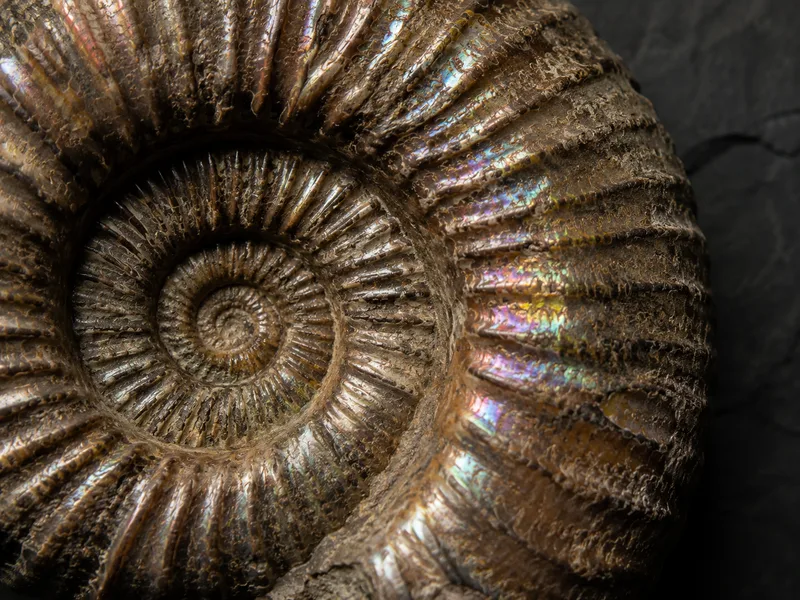
Ammonites
Whorls, ribs, sutures, chambers, matrix, polish, and restoration.
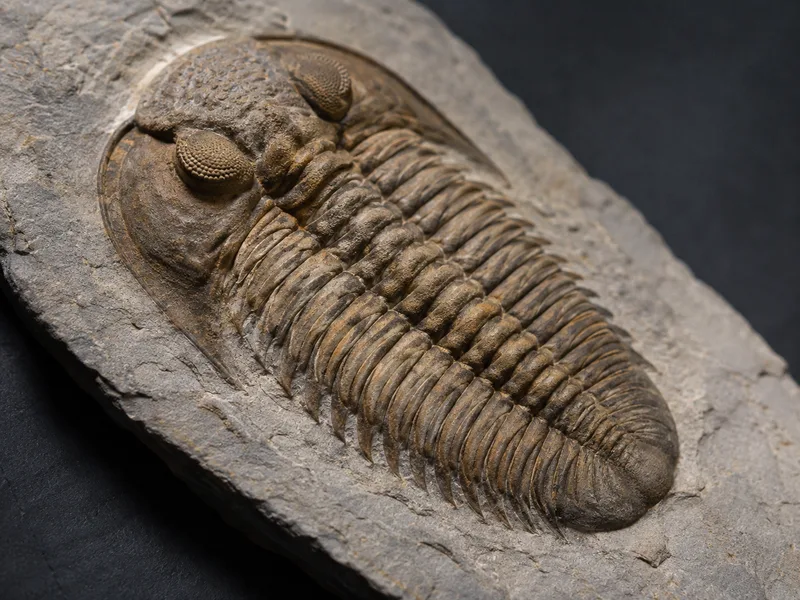
Trilobites
Cephalon, thorax, pygidium, eyes, spines, articulation, and preparation.
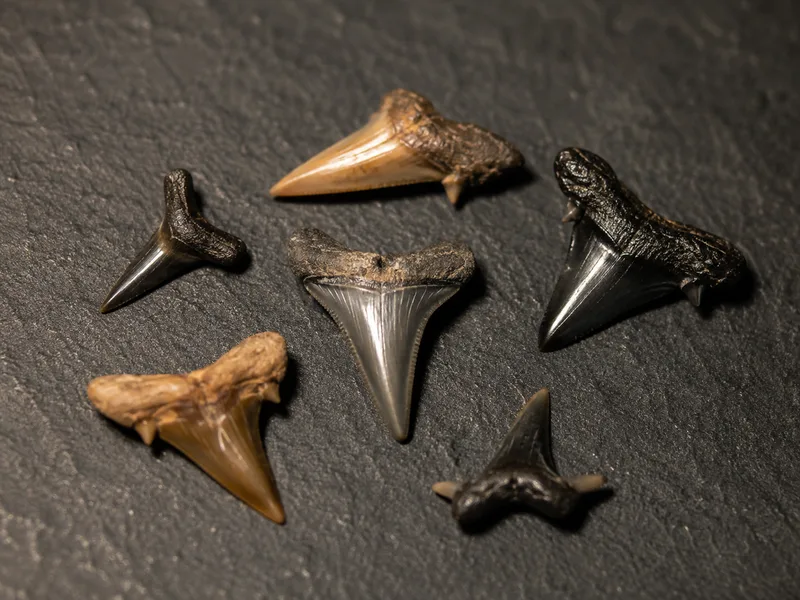
Shark teeth
Crown, serrations, root, jaw position, locality, repairs, and age.
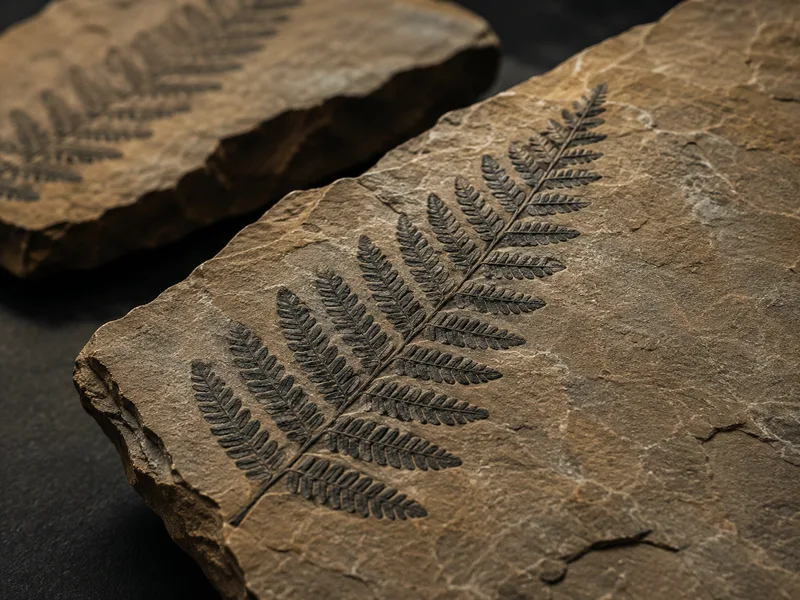
Leaves & plants
Venation, margins, carbon films, impressions, matrix, and formation.
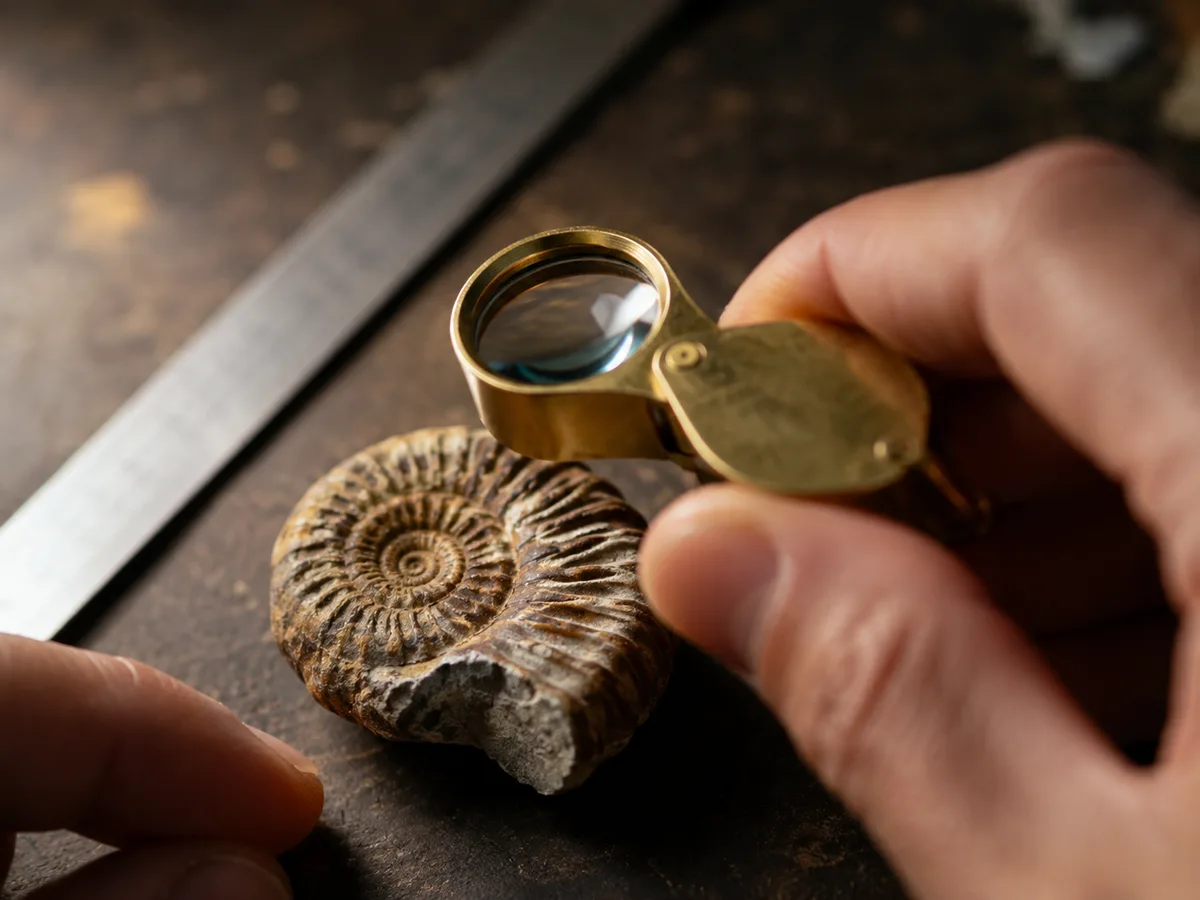
Photograph before preparing or cleaning.
Browse major fossil groups
Use the group as a starting point, then narrow by anatomy, age, formation, locality, preparation, and provenance.
Ammonite Fossils
Coiled cephalopod shells from many Mesozoic seas, collected as natural, prepared, polished, split, or iridescent specimens.
Open guide →Trilobite Fossils
Extinct marine arthropods whose cephalon, thorax, pygidium, eyes, spines, and preparation boundaries carry the identification evidence.
Open guide →Fossil Shark Teeth
Dental fossils identified through crown shape, cutting edges, serrations, root form, position in the jaw, locality, and geologic context.
Open guide →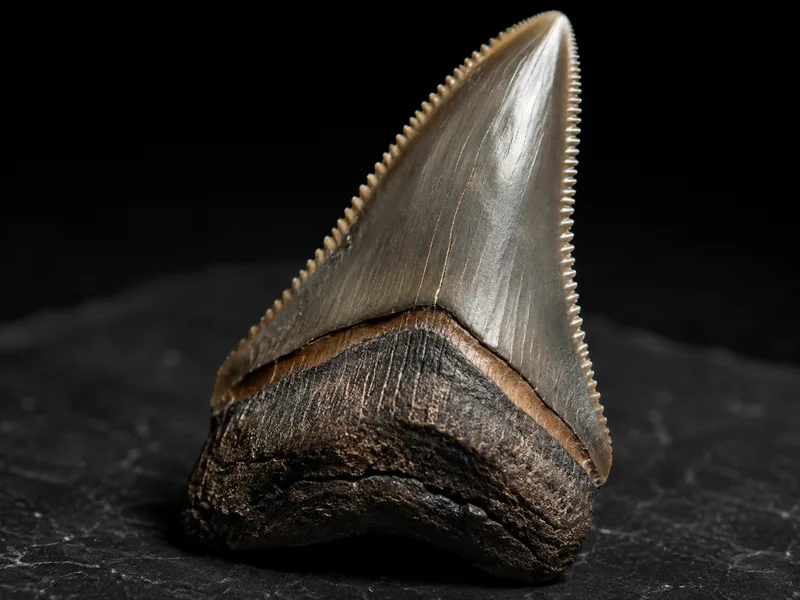
Megalodon Teeth
Large fossil shark teeth whose value depends on exact position, size, enamel, serrations, root, bourlette, repair, and reliable provenance.
Open guide →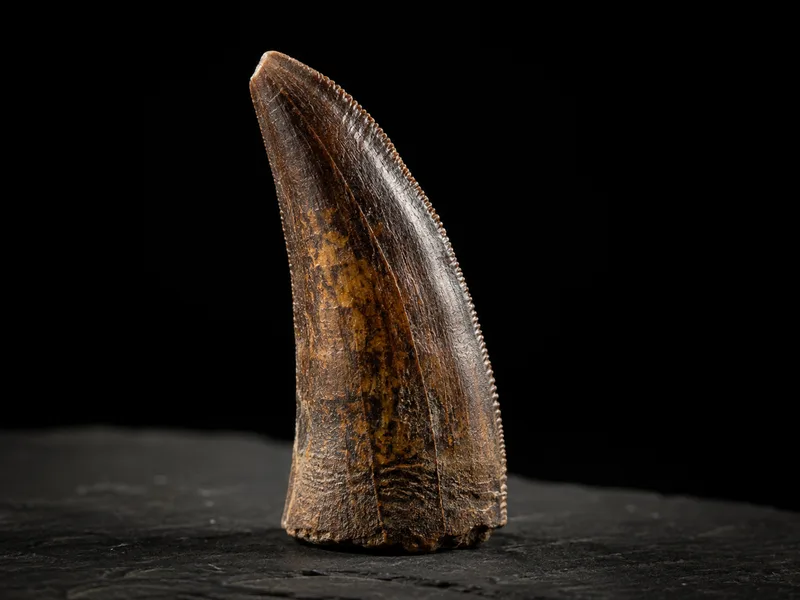
Dinosaur Teeth
Vertebrate fossils that require especially careful legality, locality, restoration, and anatomical identification review.
Open guide →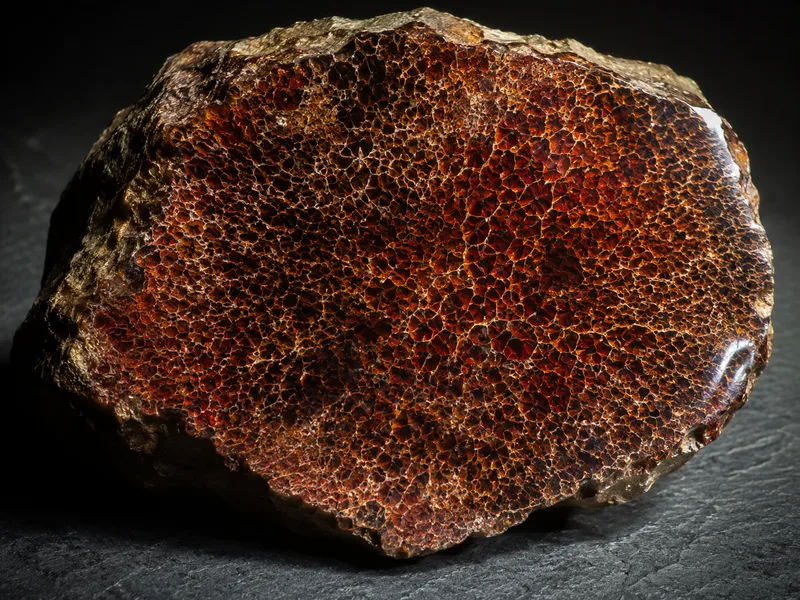
Dinosaur Bone
Fragments, identifiable elements, and prepared bones whose scientific and legal context matters more than dramatic marketing.
Open guide →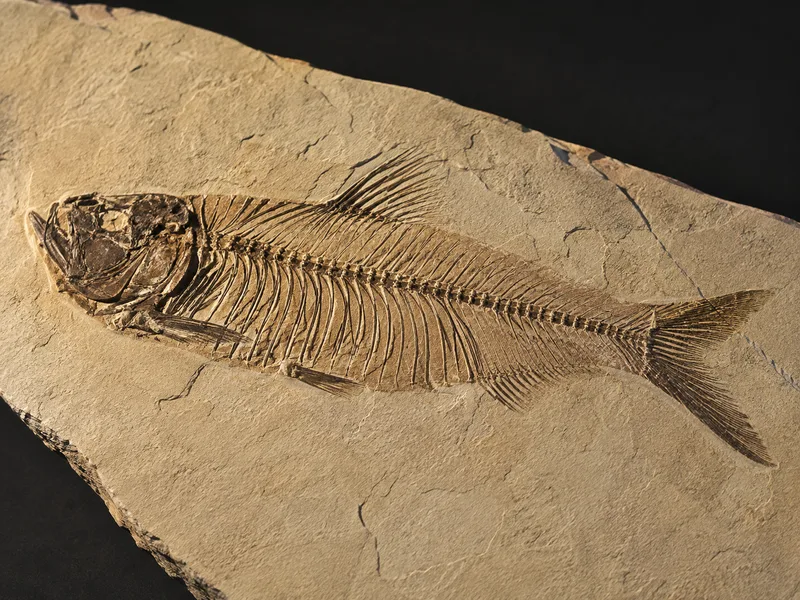
Fossil Fish
Whole fish, partial skeletons, scales, teeth, and plates preserved in shale, limestone, concretions, or phosphate.
Open guide →Plant Fossils
Leaves, ferns, cones, seeds, stems, bark, and wood preserved as impressions, compressions, coalified films, or mineral replacements.
Open guide →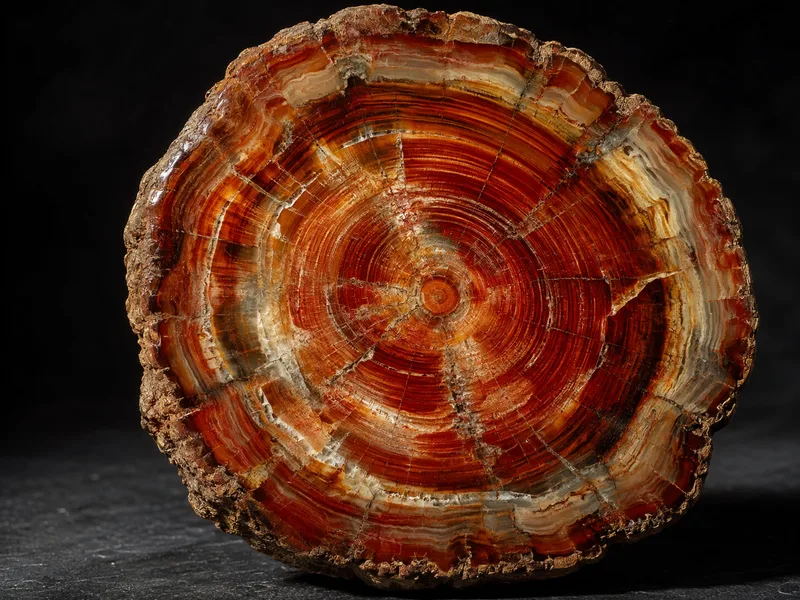
Petrified Wood
Mineralized wood collected as rough branches, slabs, rounds, polished displays, and scientifically informative growth structures.
Open guide →A name must fit the geologic clock.
The USGS divides the Phanerozoic into Paleozoic, Mesozoic, and Cenozoic eras, then periods and epochs. Fossil groups and formations constrain which identifications are possible.
Search the evidence, not only the species name.
Add fossil group, formation or locality, dimensions, matrix, preparation, and restoration terms. Marketplace similarity is a comparison tool, not proof.
Affiliate disclosure: qualifying purchases may earn this site a commission at no extra cost to you.
Preparation can reveal a fossil—or manufacture one.
Inspect anatomy, matrix continuity, tool marks, filler, paint, adhesives, repeated forms, and impossible associations. A restored or composite specimen can still be desirable when the work is accurately disclosed.
Use the authenticity guide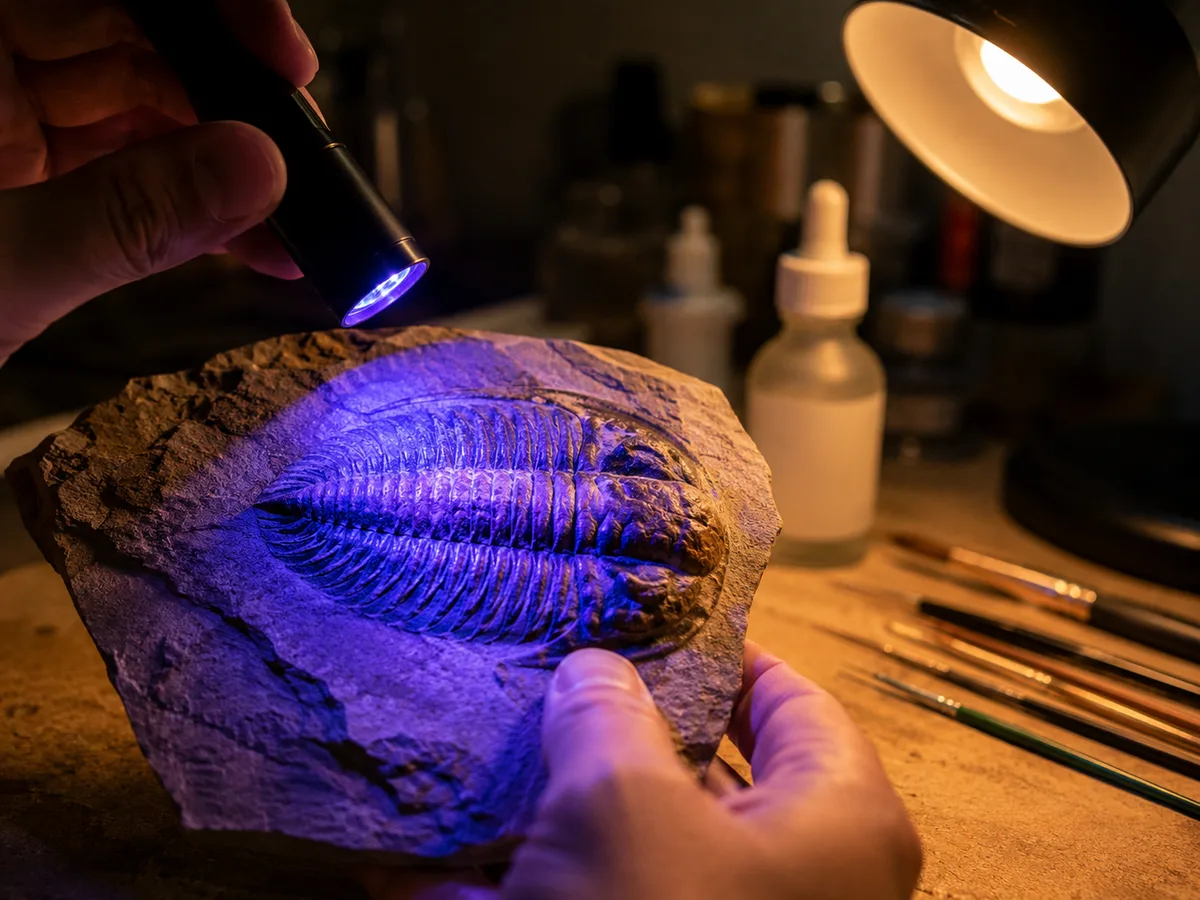
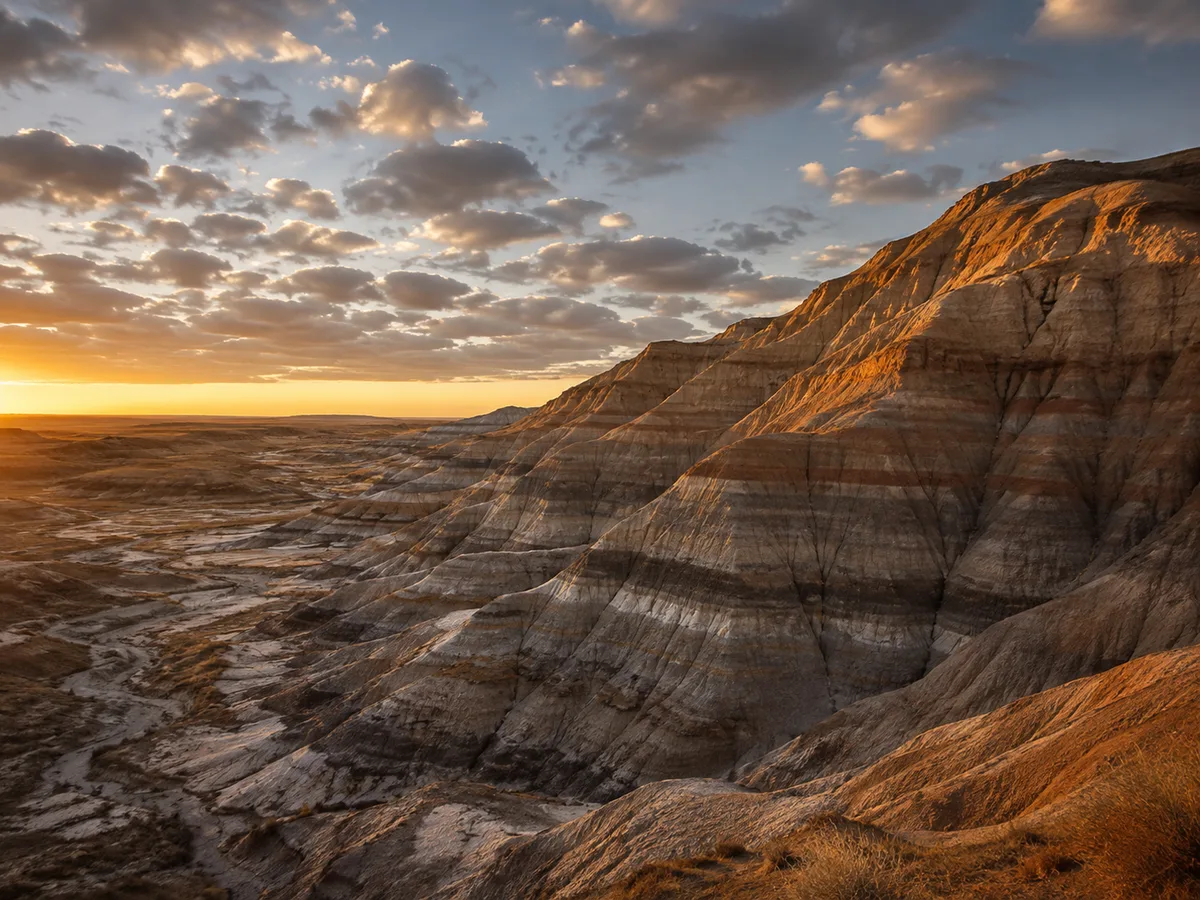
Ownership begins with the land and the law.
On U.S. Bureau of Land Management land, casual collection generally applies only to reasonable quantities of common invertebrate and plant fossils for personal use; vertebrate fossils require permits and casual-collected federal fossils cannot be sold. Fossil collecting is prohibited throughout the U.S. National Park System.
Review legal provenancePractical collector reading
Build your first collection
Start with common, well-documented specimens that teach morphology and matrix.
Read guide →Real, replica, restored, composite
Translate marketplace language into specific questions about original material.
Read guide →The label is part of the fossil
Old records can preserve locality and collection history that anatomy alone cannot recover.
Read guide →